

Data Quality and Integration in the AI Era
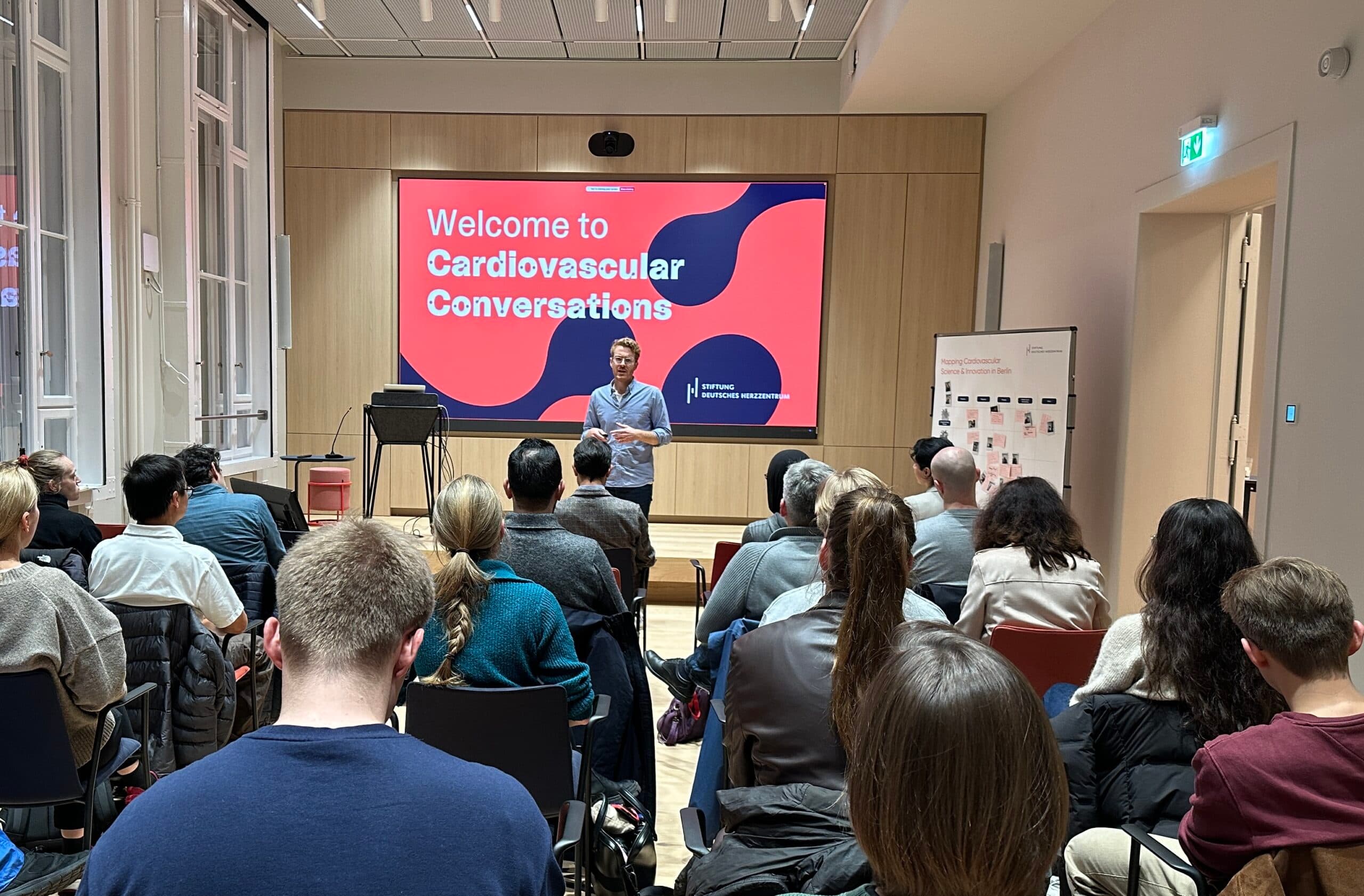
TheMay2026sessionoftheCardiovascularConversationsMeetupcenteredonthetimelyandoverarchingtopic"DataQualityandIntegrationintheAIEra."
Trust the Signal: ECG Data Quality for AI in Cardiology
In his talk, Tobias Schaeffter (PTB) emphasized that artificial intelligence (AI) in medicine fundamentally depends on the quality of the data used for training and validation. The presentation highlighted that trustworthy AI requires not only high-performing algorithms but also reliable, representative, and well-annotated datasets. The METRIC framework was presented as a structured approach to evaluating data quality across 15 dimensions, including representativeness, precision, accuracy, and relevance. Using the PTB-XL ECG dataset as a reference, the talk demonstrated how standardized benchmark datasets and quality metrics improve the development, evaluation, and explainability of AI models. The presentation also emphasized that data quality is central to compliance with the EU AI Act, which requires robustness, accuracy, transparency, and traceability for high-risk medical AI systems.
AI Applications for Molecular and Clinical Data Integration
The presentation of Altuna Akalin (MDC) explored how AI can integrate molecular, clinical, and imaging data to improve diagnostics, treatment selection, and precision medicine. By combining labeled and unlabeled multi-omics datasets, deep learning models can identify latent biological patterns that enhance biomarker discovery and significantly improve prediction of treatment response, even in small clinical trials. Dr. Akalin also introduced his own developments like the AI-powered tool Onconaut, which supports clinicians by matching patients with targeted therapies, clinical trials, guidelines, and relevant literature. Looking ahead, his research aims to integrate diverse data modalities—including genomics, ECGs, medical imaging, laboratory data, and clinical text—to create comprehensive patient representations and ultimately enable digital twins for personalized medicine. The presentation highlighted AI’s potential to accelerate diagnostics, optimize treatment decisions, and improve healthcare outcomes through multimodal data integration.
ECG and EGM Based Predictive Algorithms in Heart Rhythm Medicine
Claudius Baldauf (DHZC) highlighted in his talk the growing role of AI in analyzing ECG and intracardiac electrogram (EGM) data to support the diagnosis and treatment of cardiac arrhythmias, particularly atrial fibrillation. AI-based predictive algorithms have already demonstrated strong clinical performance and are increasingly integrated into routine workflows. The presentation also points out that broader implementation requires automated data collection and better integration of clinical information across healthcare systems.

