

Perspectives on Pediatric Cardiomyopathies and Myocarditis
ThreemembersofavisitingteamfromSamsungMedicalCenterinSeoul(SouthKorea),whowerecurrentlyvisitingCharité,acceptedtheinvitationoftheirDHZChostGerhardHindricksandspontaneouslyjoinedthesession,providingapleasantandunexpectedinternationalcontribution.
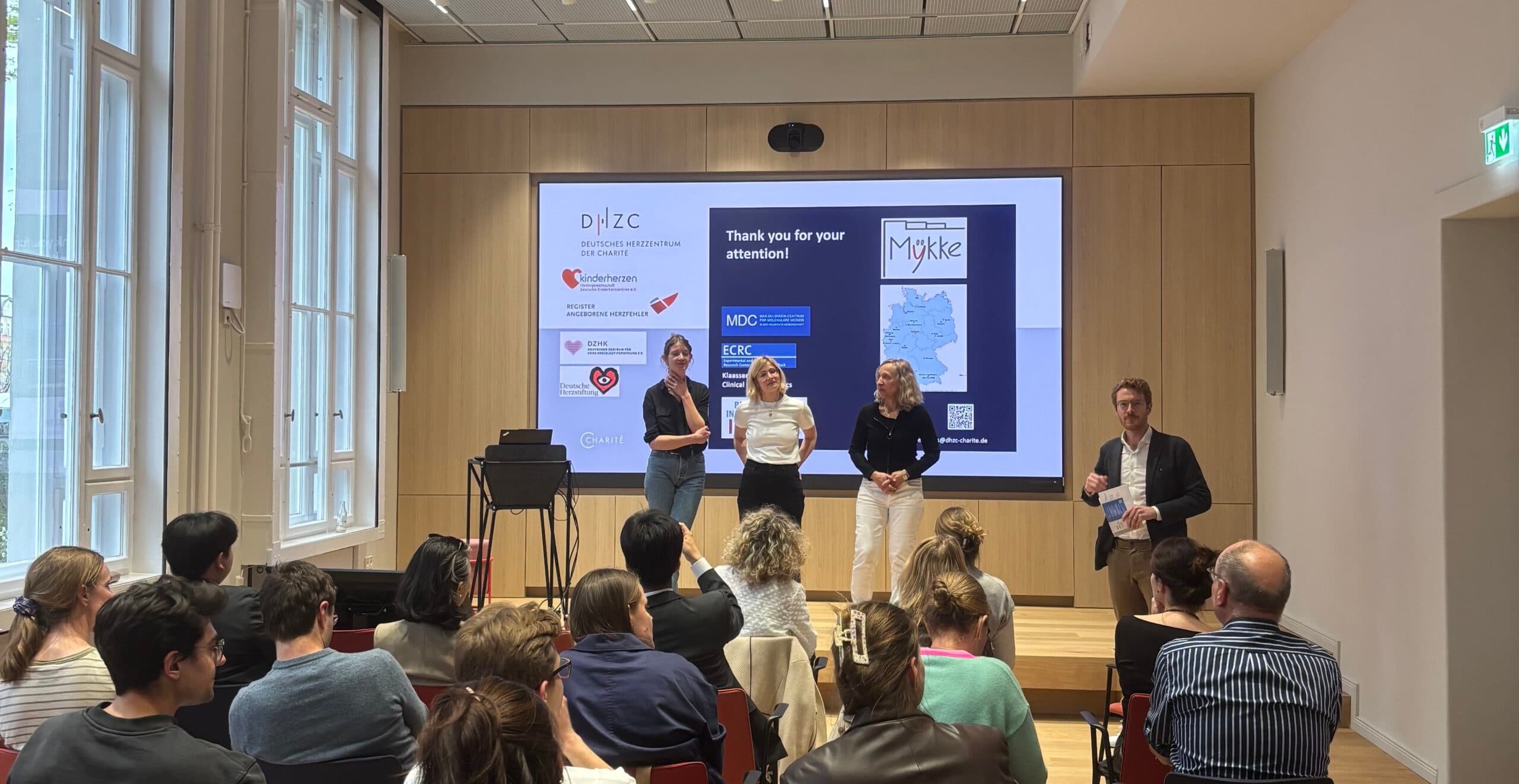
In her talk, Sabine Klaassen introduced the topic of pediatric cardiomyopathies, emphasizing that these are heart muscle diseases characterized by structural and functional abnormalities in the absence of other causes. Although rare, with an incidence of approximately 1–1.5 per 100,000 children per year, they represent a major cause of end-stage heart failure and a leading indication for pediatric heart transplantation. Cardiomyopathies are clinically and morphologically classified into distinct phenotypes; however, current guidelines stress that phenotype alone is not a final diagnosis and that underlying genetic causes must be considered. She highlighted the complex genetic architecture of these diseases, including the role of proteins such as troponin I and emerging genes like PRDM16. Despite significant progress, many cases remain unresolved. Overall, genetic diagnostics are essential for early risk identification and improved risk stratification, supporting more personalized clinical management.
Franziska Seidel described pediatric myocarditis as a heterogeneous disease characterized by cardiomyocyte damage and inflammatory infiltration, highlighting insights from the multicenter registry for pediatric myocarditis MYKKE with > 1100 enrolled patients and 29 participating centers. She emphasized that genetic variants are present in over one-third of severe cases and significantly influence phenotype and outcome. In particular, TTN truncating variants may increase susceptibility to inflammatory cardiomyopathy in a “second-hit” model, contributing to variable recovery. These variants are important because the encoded protein titin plays a key role in the structure and elasticity of muscle cells and truncated titin may not function properly. Franziska Seidel also outlined age-dependent immunological differences and the recent rise in Parvovirus B19 myocarditis. Overall, integrating clinical, genetic, and immunological data is key to improved risk stratification and more individualized therapies.
Nele Rolfs focused in her talk on predictors of myocardial recovery in children with severe heart failure due to myocarditis requiring ventricular assist device (VAD) therapy. She highlighted that while VAD support is often used as a bridge to transplantation, a substantial proportion of pediatric patients (37%) can achieve recovery and undergo successful device explantation. A clinical prediction model (PredictClinVAD) demonstrated high accuracy in identifying recovery, with key predictors including younger age, female sex, and acute myocarditis on initial biopsy. Importantly, genetic analyses revealed a high burden of cardiomyopathy-associated variants in these patients, which were more frequent in non-recovered individuals and provided independent negative predictive value for recovery. Integrating clinical, histopathological, and genetic data improved risk stratification and may guide individualized treatment strategies, particularly decisions between bridge-to-recovery and transplantation. Despite promising findings, limitations such as small sample size and lack of validation highlight the need for further studies